Rise Of Bollywood- A Journey Through Decades
- Siddhi Khare
- Jun 23, 2024
- 3 min read

The ever growing Hindi film industry better known as Bollywood is cherished and loved by its fans not simply in India but globally. It has transcended borders and barriers being a global sensation captivating the hearts of millions with its vibrant music, extravagant sets and appealing aesthetics.
Ever wondered when and where did this journey of glitz and glamour start?


Id like to take you back to 1913, this is where it all began. The first ever full length feature film in India, 'Raja Harishchandra' was released on 3rd May 1913. Produced
and directed by the father of Indian Cinema, Dada Saheb Phalke himself. It was a silent film and the first actor in India, Dattatraya Damodar Dabke played the protagonist.
The first sound motion film of India, "Alam Ara" was released in 1931 directed by Ardeshir Irani.
By around 1930s around 200 films struck the Indian theaters per year.

The 1930s and 40's was the tempestuous time of the world war 2 . India was harried by the catastrophic war, the blazes of the great depression and the independence movement.
Most films of this period revolved around social issues. The struggle for independence was prominently used as a backdrop in numerous films. Some star hits include the first color film "Kisan Kanya" and the coloured version of "Mother India".
The year 1943 saw the arrival of Indian cinema's first 'blockbuster' starring Ashok Kumar and Mumtaz shanti offering, the movie Kismet, which grossed in excess of the The film tackled contemporary issues, especially those arising from the Indian Independence movement, and went on to become "the longest running hit of Indian cinema", a title it held till the 1970s.
The 1950s and 1960s are widely recognized as the golden era of Indian cinema. During this period, legendary actors like Guru Dutt, Raj Kapoor, Dilip Kumar, and Meena Kumari emerged, leaving an enduring impact on the history of Indian film with their unforgettable performances and the creation of timeless classics. Vintage gems like Kala Pani, Mughal-E-Azam ,Sangam, Chalti Ka Naam Gadi were the chart toppers of the period.

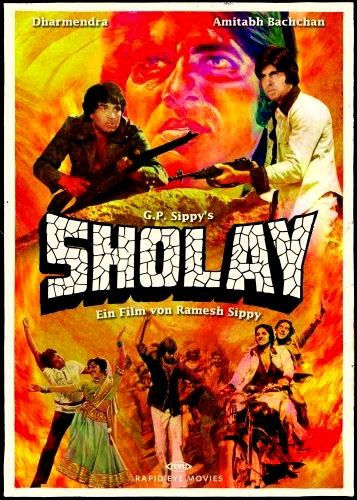
The 1970s were marked by the beginning of the era of "Masala Movies" in Bollywood. Cinema icons like Rajesh Khanna, Dharmendra, Hema Malini, and others charmed the audiences with their charisma. Director Manmohan Desai, a pioneer of Masala cinema, sought to transport viewers into a world free from agony and poverty.
Blockbusters like 'Sholay' garnered both domestic and international acclaim, catapulting Amitabh Bachchan to super stardom.

The 1980s witnessed the entry of women in the arena of the Hindi film industry, both as actors as well as talented directors like Meera Nair and Aparna Sen. It was a period of dynamic changes in the industry technologically as well. New stars came up while the old ones disappeared. In 1981, Rekha's outstanding performance in 'Umrao Jaan' cemented her legacy as a cinematic icon in the annals of Indian film history.

During the 1990s, a new generation of actors emerged, featuring Shah Rukh Khan, Salman Khan, Madhuri Dixit, and Aamir Khan, who adopted innovative techniques, propelling Indian cinema to new heights. A notable milestone occurred in 2008 when A.R. Rahman won Academy Awards for the 'Slumdog Millionaire' soundtrack. Films like Kuch Kuch Hota Hai, Hum Aapke Hai Kon, Dil Walein Dulhania Le Jaayenge were huge box office successes.
In a nutshell, the history of the Indian film industry stands as a witness to its ever-growing dynamic nature. From the pioneering days of silent films to the global recognition of contemporary masterpieces Indian Cinema has turned into a global sensation capturing the hearts of people by its versatile talent, rich narratives, vibrant aesthetics and innovations.


Comments